Researcher & Educator Suite

tics logo version2
tics icon images81

Purpose of the Suite

The TICS Trauma-Informed Researcher & Educator Suite supports individuals, teams, and organisations to embed trauma-informed, capability-enhancing, and relational practice across research, education, and system development.

The suite reflects TICS’s long-standing commitment to developing environments that are safe, connected, inclusive, and restorative. It draws on interdisciplinary knowledge from social policy, psychology, education, and lived experience to provide a practice framework that enables professionals to work ethically and effectively with people affected by trauma and adversity.
Structure of the Suite

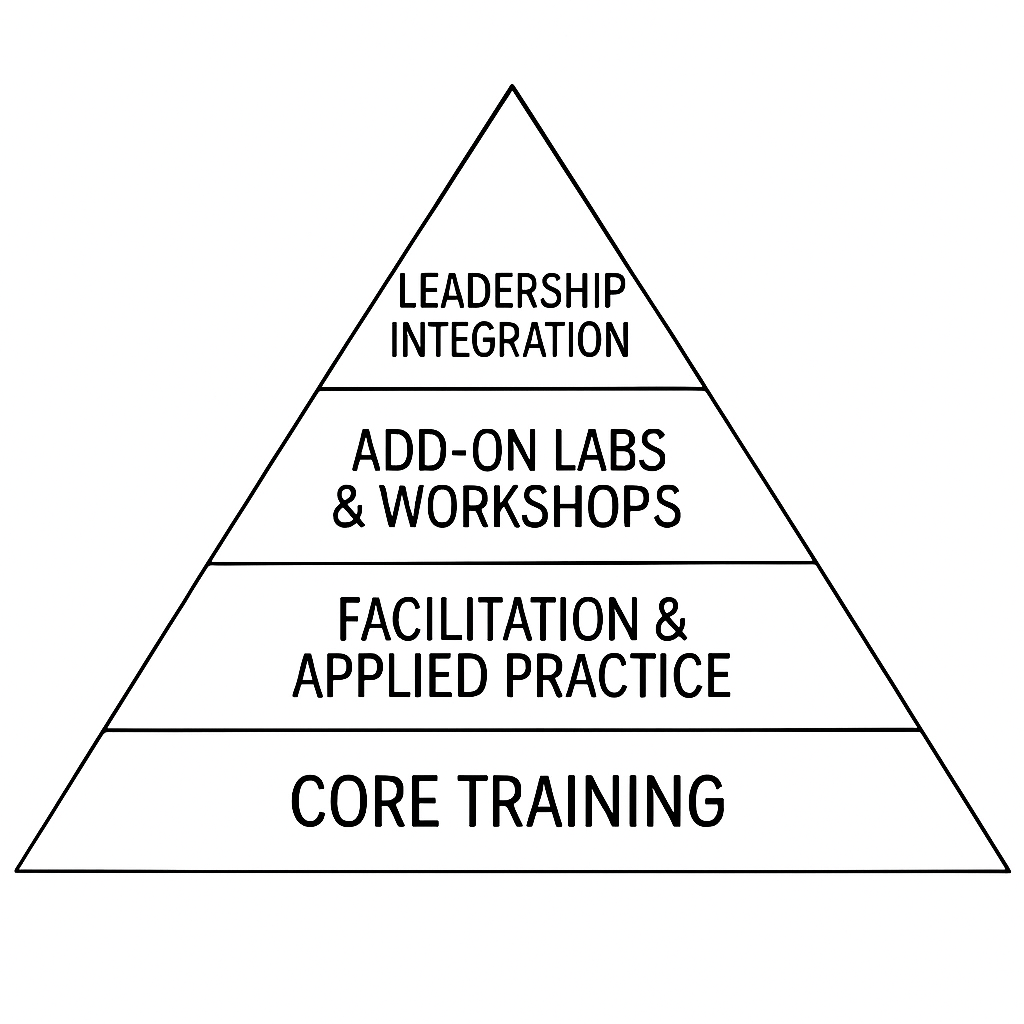
The suite is structured into four progressive tiers of learning and practice:

  • Core Training – Foundational trauma-informed knowledge and application.
  • Add-On Labs & Workshops – Skill-building spaces for specific tools or frameworks.
  • Facilitation & Applied Practice – Co-production and systemic reflection sessions.
  • Leadership Integration – Sustained reflective practice for lived-experience leaders.

Core Theoretical Foundations

1. Trauma-Informed Practice
All sessions are grounded in the six key principles of trauma-informed practice:
  • Safety: creating predictable, trustworthy environments.
  • Trustworthiness: transparent processes that build reliability.
  • Choice: maximising autonomy and agency.
  • Collaboration: shared ownership and co-creation.
  • Empowerment: focusing on strengths and capabilities.
  • Cultural Humility: respecting difference and addressing power imbalances.

These are supported by the four Rs:

  • Realise the impact of trauma,
  • Recognise its signs and contexts,
  • Respond appropriately, and
  • Resist retraumatisation.
Together, these principles shape how TICS designs, delivers, and evaluates all learning experiences — not as theory, but as relational practice.
2. The Capability Approach
The suite integrates the Capability Approach (Sen, 1999; Nussbaum, 2011) to frame wellbeing, inclusion, and participation as questions of freedom and opportunity.
Rather than viewing individuals as “resilient or not resilient,” the Capability Approach recognises that people’s real freedom to achieve valued outcomes depends on the social, economic, and relational conditions that surround them.

In trauma-informed research and education, this means:
  • Focusing on what people can do and be, not only what they have endured.
  • Understanding how systems and structures can expand or constrain capabilities.
  • Building contexts where participation, autonomy, and belonging are genuinely possible.
This perspective underpins all TICS learning design — ensuring the work always bridges personal and systemic dimensions of change.

3. Co-Production and Lived Experience
TICS’s approach to co-production goes beyond consultation. It is based on shared power, mutual respect, and recognition of lived experience as expertise.
Across the suite, participants learn how to:
  • Build equitable partnerships between professionals and lived-experience contributors.
  • Navigate positionality, insider–outsider dynamics, and power.
  • Apply co-production principles within both research design and educational settings.
This emphasis supports the development of inclusive, reflective and ethical practice cultures that mirror trauma-informed values in real-world collaboration.
4. Language and Record-Keeping as Practice
Language and record-keeping are central to how systems communicate care, power, and value.
Building on TICS’s existing training (“Trauma-Informed Record Keeping” and “Language that Heals”), this suite reinforces the importance of language as relational action — the words we write and speak either build bridges of understanding or reinforce barriers of exclusion.
  • Words shape perception, identity, and power.
    The language used in research, education, and professional communication influences how people are seen, understood, and remembered.
  • Records and outputs become enduring artefacts of relationship.
    Whether in a student file, an academic paper, or a research report, written work captures how institutions and individuals recognise or erase humanity, complexity, and belonging.
  • Trauma-informed writing is not just about accuracy, but about connection, respect, and dignity.
    It demands awareness of tone, audience, and the ethical implications of representation.
Within the research and education context, this principle extends beyond case notes or student records to include:
  • How research findings are written, analysed, and published, ensuring that voice, vulnerability, and context are treated with care rather than objectification.
  • How teaching materials and classroom discussions are framed, so that examples, case studies, and readings do not retraumatise or misrepresent the experiences of care-experienced or marginalised people.
  • How academic and organisational documentation reflects shared responsibility — positioning students, participants, and colleagues as collaborators rather than subjects of scrutiny.
In essence, trauma-informed language asks:
“Does what I write create safety, belonging, and dignity — or does it reinforce distance, shame, or harm?”

By embedding this principle across research, education, and support practice, TICS helps build systems where every word is a site of care.
5. Family Privilege as a Reflexive Lens
The concept of Family Privilege (Seita, 2001) is used throughout this suite as a lens for reflection and equity.
Family Privilege refers to the often-unseen social advantages gained from having stable family networks, cultural capital, and inherited support systems.
In trauma-informed research and education, recognising Family Privilege means:
  • Understanding the invisible norms that define “success” or “stability.”
  • Acknowledging how absence of family support can shape identity, opportunity, and belonging.
  • Designing systems that compensate for — rather than penalise — these structural inequities.
Using Family Privilege as a reflexive tool deepens practitioners’ empathy and awareness, linking personal reflection to wider structural understanding.
6. Reflective and Relational Practice
All modules integrate reflective practice as both a skill and a safeguard.
Reflection ensures that trauma-informed principles move beyond awareness into embedded habit.
Participants are encouraged to develop reflective routines — individually, in supervision, and collectively — as a means of maintaining safety, accountability, and care.

Find Out More

Get in Touch
To discuss how TICS can support your research, evaluation, or professional development project, please contact:
MAKE AN ENQUIRY

Shop

TICS LTD © Copyright 2026 TICS is a trading name of Trauma Informed Consultancy Services LTD - Registereed Co 14213958 in England and Wales
linkedin facebook pinterest youtube rss twitter instagram facebook-blank rss-blank linkedin-blank pinterest youtube twitter instagram