


Helps colleges and universities embed trauma-informed practice across teaching, learning, and student support. Builds from awareness to institution-wide policy and co-production with learners.
Colleges and universities shape lives during critical transitions. The FE & HE Training Pathway equips staff, tutors, and leaders to create safe, supportive environments that enhance learning and wellbeing.
Who is it for? Lecturers, tutors, student support staff, wellbeing teams, senior leaders, and anyone working with students in colleges or universities.
What will you learn? How to apply trauma-informed principles in teaching, curriculum design, student support, and leadership. You’ll explore safeguarding, reflective practice, supervision, and policy development for institution-wide culture change.
Next steps: Begin with awareness courses such as Trauma-Informed Education in FE & HE: An Introduction, then move into reflective practice, supervision, and embedding trauma-informed practice across departments to build consistency across the institution.
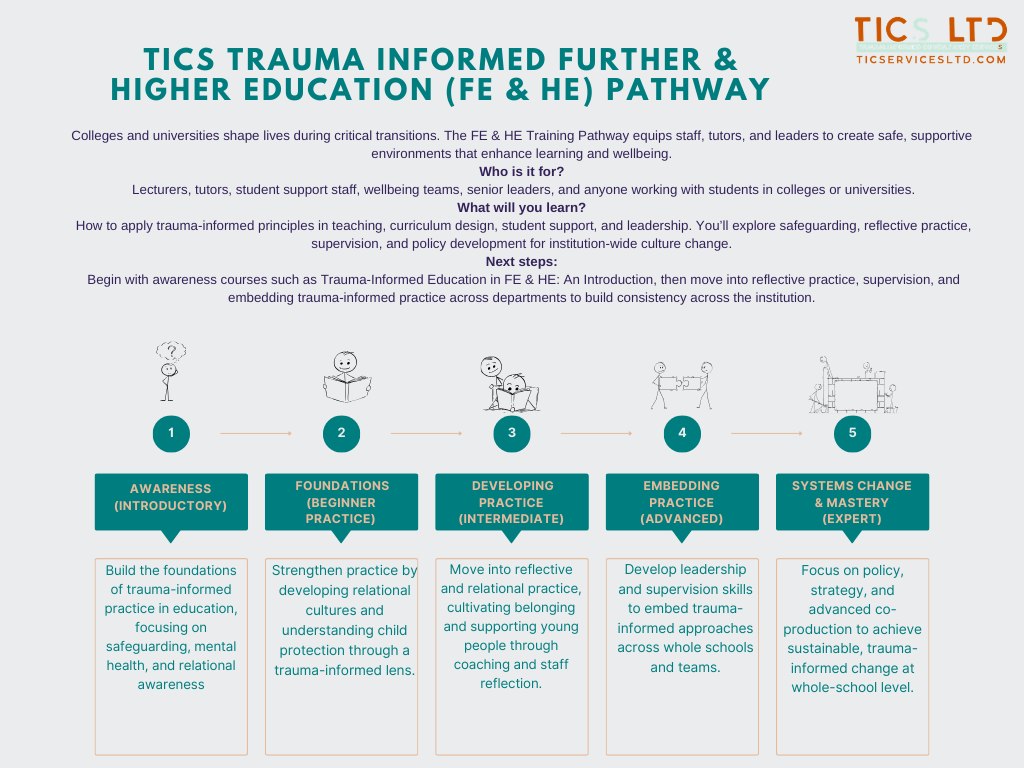
Begin with an introduction to trauma-informed principles in colleges and universities. Build awareness of safeguarding, wellbeing, and the impact of transitions such as leaving home, which often shape students’ experiences.
Develop safe and relational environments where students feel they belong. Explore approaches to student mental health, residential life, and communication in support services.
Deepen practice through reflective teaching, trauma-informed curriculum design, and supervision for staff supporting students. Learn to bring student voice and participation into learning and wellbeing.
Support leaders to embed trauma-informed practice across departments and student services. Strengthen supervision, leadership, and co-production with student unions and learner networks.
Focus on institution-wide change through strategy, evaluation, and advanced co-production. Build sustainable trauma-informed systems that support the whole student community.
