
Relational Behaviour Practice: When to Draw the Line and why Trauma-Informed Approaches Always Fit
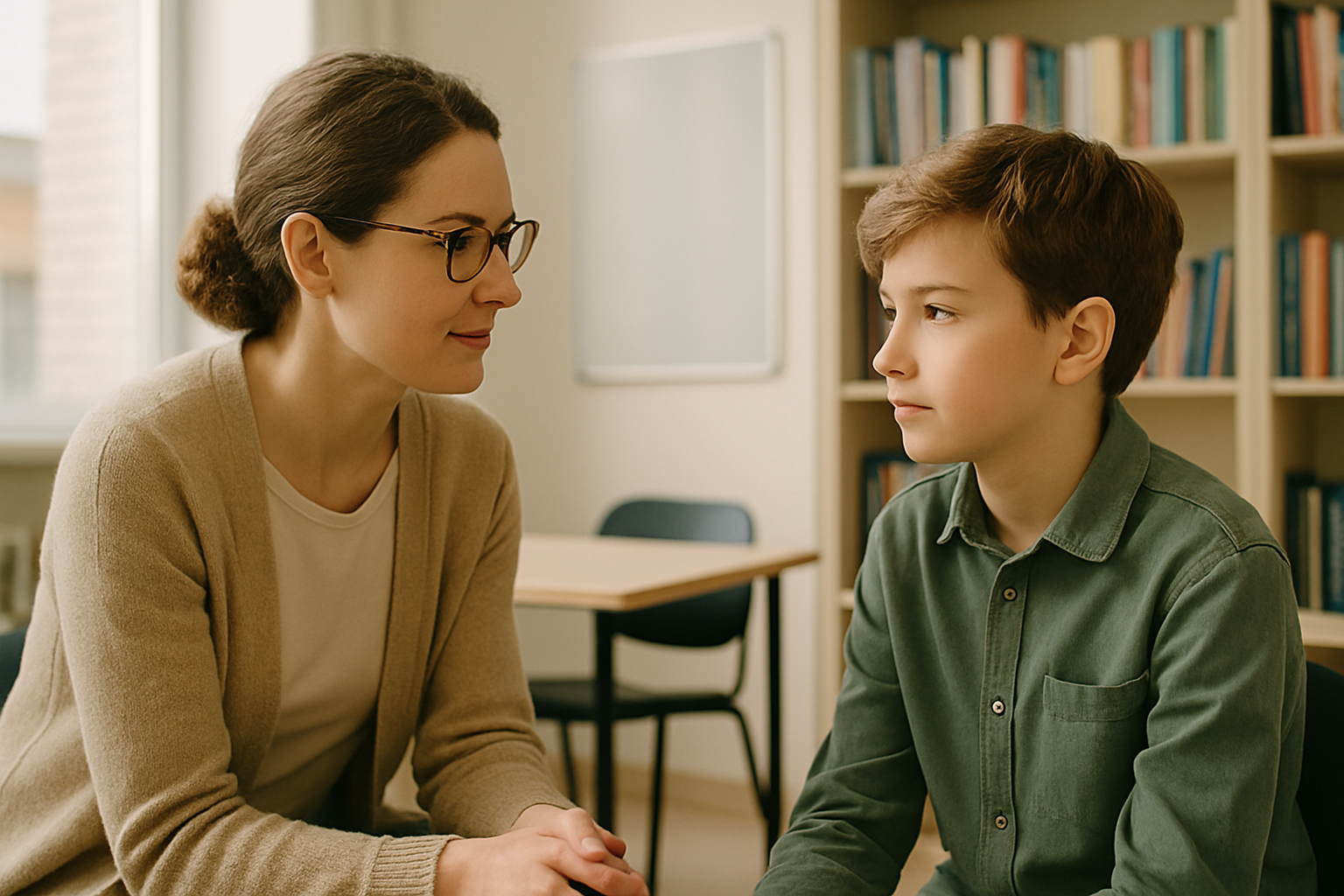
Recently, during a training session I delivered in a school, someone asked me a question I hear everywhere from primary classrooms to secondary behaviour hubs to virtual school teams:
“I want to use a relational behaviour approach… but when am I just being too nice? When do I draw the line?”
You could feel the whole room lean in. It’s a question rooted in care, fear, dedication, and a genuine desire to do the right thing. Ultimately, it reveals one of the biggest misconceptions in education today:
That being trauma-informed means being permissive, passive, or “soft.”
I want to be absolutely clear from the outset: Relational behaviour practice is not being soft.
It is not being a pushover.
It is not about being overly nice.
It is grounded in neuroscience, safety, and skilled professional behaviour.
And it is always appropriate.
The really helpful thing to note is that we never need access to a young person’s trauma history to use it. Just show up every day with a willingness to see behaviour through the lens of the brain, not the lens of blame. This blog explores what relational behaviour practice really means, why it works, when to draw the line, and why trauma-informed approaches benefit every student and every member of staff.
What Is Relational Behaviour Practice?
- connection over control
- regulation over reaction
- safety over compliance
- boundaries over punishment
- and repair over rupture
Relational Behaviour Practice Is Not a Soft Option-It’s Neuroscience
In that recent training session, I watched staff have a profound realisation:
Behaviour is not a moral issue-it’s a neurological one. When a young person’s stress response system activates, their behaviour is driven by survival brain, not thinking brain.
A quick neuroscience breakdown:
- Prefrontal cortex (thinking, reasoning, planning) - Goes offline under stress. Logical consequences won’t land here.
- Limbic system (emotion and memory) - Floods the system with big feelings and reactive impulses.
- Amygdala (threat detector) - Scans for danger and triggers fight, flight, freeze, or fawn.
This means:
- shouting doesn’t calm the brain
- punishments don’t regulate the nervous system
- shame disconnects the child from learning
- threat increases behavioural escalation
- punitive responses strengthen survival pathways, not learning pathways
Relational behaviour approaches work because they align with the brain’s stress systems. They lower perceived threat, stabilise the nervous system, and help bring the thinking brain back online. This is not “being lovely” but is evidence-based neurological recalibration.
You Don’t Need Their History to Be Trauma-Informed
One of the most common questions I hear in schools is:
“How can we be trauma-informed if we don’t know what they’ve been through?”
And my answer, always, is this:
We don’t need the story. We just need to avoid responding in ways that increase harm. A trauma-informed approach becomes effective because it’s universal.
We never lose anything by being calmer, clearer, steadier, or more attuned.
A trauma-informed approach without the backstory still:
- reduces shame
- increases predictability
- supports emotional regulation
- avoids triggering stress responses
- encourages relational safety
- strengthens learning pathways
- protects both adults and students
You do not need to know if a child has trauma. You only need to know that a trauma-informed response will never negatively impact a child who doesn’t.
This is what makes the approach so powerful:
it meets every child where their nervous system is, not where their file says they should be.
So When Do You Draw the Line?
Here’s what I said in that training… Draw the line the moment safety, dignity, or wellbeing is compromised.
Hold the line calmly.
Repair after rupture.
And always return to relationship.
You don’t weaken boundaries by being relational.
You strengthen them.
You make them safe.
You make them predictable.
You make them human.
And the truth is:
children don’t learn from fear.
Children learn from connection.
Repair After Rupture: The Forgotten Skill
This is the part that moves me every single time I deliver training. Every relationship has moments of rupture: arguments, conflicts, behavioural incidents, escalations.
But for many young people (particularly those with trauma histories), rupture has always meant:
- someone leaves
- someone rejects them
- someone punishes them
- someone withdraws affection
- someone decides “they’re too much”
So when we learn how to repair, something life-changing happens.
Repair says:
- “You didn’t lose me.”
- “We can fix this.”
- “The boundary was real but the relationship is safe.”
- “I’m still here.”
Repair teaches the brain:
- conflict does not equal abandonment
- relationships can survive difficulty
- emotional safety can be restored
- adults can be trusted
From a neuroscience perspective, repair is where the true learning happens as it can build new neural pathways for regulation, trust, and relational resilience.
A school without repair is a school full of ruptures.
A school with repair is a school full of healing.
Trauma-Informed Practice Supports Staff Too
This is a crucial and often overlooked part of trauma-informed relational practice.
When staff understand behaviour as communication rather than challenge:
- the pressure reduces
- the shame reduces
- the exhaustion reduces
- the helplessness reduces
- the emotional reactivity reduces
Staff stop personalising behaviour. They stop seeing behaviour as disrespect.
They stop believing they’re “failing” when things escalate. A trauma-informed model protects staff by giving them a predictable framework:
- regulate yourself
- regulate the environment
- regulate the relationship
- then regulate the behaviour
It’s not just about transforming children: it’s about transforming staff experience too.
How Trauma Informed Consultancy Services (TICS) Supports Schools and Virtual Schools
We partner with:
- mainstream schools
- specialist and alternative provision
- virtual schools
- academy trusts
- residential services
- local authorities
We don’t just offer training and consultancy, we offer transformation.
What TICS brings to schools and virtual schools:
- Deep, accessible understanding of trauma-informed practice
We break down the neuroscience so staff feel empowered—not overwhelmed. - Clear, practical strategies for immediate use
No vague theories.
No jargon.
Just real tools for real classrooms. - Relational behaviour frameworks that actually work
Our approach helps staff create safe boundaries, reduce escalation, and build trust. - Emotional support for staff who feel exhausted or unsure
Many teachers and support staff feel they “should” know what to do.
We remove shame and replace it with confidence. - Long-term culture change, not one-off sessions
We provide ongoing training, consultation, reflective spaces, and implementation support. - A belief in young people that never wavers
We champion children endlessly—especially those who’ve been misunderstood or unseen.
Virtual schools consistently tell us that TICS training helps designated teachers and foster carers feel:
- validated
- equipped
- calmer
- more connected
- more hopeful
Schools tell us that after our training:
- escalations reduce
- relationships strengthen
- boundaries become clearer
- staff feel safer
- children feel understood
- the entire atmosphere shifts
And that is the heart of trauma-informed work:
creating environments where both children and adults feel safe enough to thrive.
Final Thought
If you take one message from this blog, let it be this:
Trauma-informed relational practice is not being soft.
It is not being permissive.
It is not being naive.
It is:
- emotionally courageous
- neurologically accurate
- relationally grounded
- ethically necessary
- and universally beneficial
It is the exact opposite of being a pushover. It is the work of steady, consistent, compassionate leadership.
And when rupture happens, as it always does, trauma-informed practice ensures that repair is possible. This is the foundation of safer schools, stronger relationships, and better outcomes for young people.