
What’s Menopause Got to Do with It?
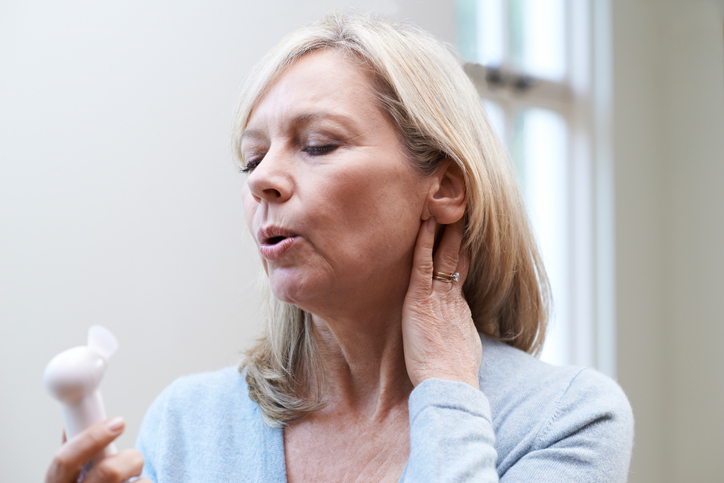
“Hindsight is a wonderful thing. Looking back, I can anchor myself in the evolving experiences of the last 10 years, but at the time? Oh my goodness, feeling so untethered was the worst.”
This is Jenny, describing her experience of perimenopause. And she’s not alone. Thanks to the rising visibility of menopause in public conversations, in part thanks to voices like Davina McCall’s, more women like Jenny are speaking up. Ten years ago, Jenny probably wouldn’t have seen a Therapeutic Menopause Coach like Amelia. In fact, she might not have talked about her experience at all. More likely, she would have visited her GP, been told she was depressed, and left with a prescription for antidepressants adding menopause to a long list of “Things that are wrong with me,” closely followed by her other list “Things I can’t get right.”
The growing conversation about menopause is something we deeply welcome. As a generation, we’ve worked hard to claim our voice. We’ve cracked glass ceilings, left unfulfilling relationships, raised un-nuclear families, and opened up about the struggles along the way. It was almost inevitable that when we hit our perimenopausal years, we’d have something to say about that too.
However, just like childhood trauma, there is something else, something under the surface which is not being said; maybe because, like the developing child, we don’t yet have the words for it. Something which we can feel, but we are not yet sure about. Something that doesn’t feel right, an inconvenient truth perhaps. This ‘something’ which I feel does need to be said, so that the billions of cis-gendered women currently experiencing the perimenopause and menopause process worldwide can put narrative to their experience is this:
When there is a history of trauma, the menopause transition is potentially explosive.
You are not going mad.
No, Jenny, there is nothing wrong with you.
And without the right information, you were never going to “get it right.”
It makes sense that for those with a trauma history, menopause brings additional challenges. We've long known that trauma affects both physical and mental health. But menopause is more than a biological process, it’s a deep psychological transition too. And that’s the part I’m most interested in.
Jenny: “As someone with attachment trauma, I worked super hard to be independent - because ‘no one else was going to do it for me’ - and successful, thinking ‘maybe then I’ll be loved’. I had, in a way, become my own attachment figure. But when perimenopause hit, I felt like I’d lost myself. That brought on additional stress and anxiety I couldn’t even begin to understand at the time.”
Davina has spoken about how night sweats triggered traumatic memories from her recovery journey. For me, the heavy clots of those final periods brought back painful memories of earlier pregnancy losses. For Jenny, it was the sheer sense of incapability, in a life where being capable had been key to her survival, that spiralled her into anxiety and overwhelm.
The truth is this: Menopause is far more than the end of menstruation or fertility. It is a profound process of physical and psychological transformation. Without a clear understanding, without a map of the terrain if you like, we can feel, as Jenny described, utterly “untethered” from everything we thought we knew about ourselves.
There are conversations to be had, there is far more learning to be done, but if any generation is going to have a voice about menopause and perimenopause it is this one.
Whether you're navigating perimenopause or menopause yourself, supporting clients through it, or living or working alongside others who are, we invite you to explore further.
Join us for "Trauma and the Menopause – Everything You Need to Know" on Friday 14th November 2025 (9:30–15:45, Online).
TICS Associate and Therapeutic Menopause Coach Amelia Brunt from Well Educated will gently guide us through this terrain, helping us look at the menopause transition through a trauma-informed lens, and, most importantly, share a resilience-informed approach to surviving and thriving through it.
Knowledge is power and there are few things more powerful than a post-menopausal woman who understands her own process. Amelia will help you read the map of the terrain so that you can find your voice, advocate for what you need, and perhaps most importantly, pass that wisdom on so that fewer women and people who bleed need to suffer in silence and confusion.